
Environmental Assessment for a 10-Year Dredging and Nearshore Sand Placement Program
Client: Transport for NSW - Maritime Infrastructure Delivery Office (MIDO)
Sector: NSW State Government — maritime infrastructure planning and delivery
Timeframe: 10-year maintenance dredging program
Region: Coffs Harbour, NSW
Keeping maritime infrastructure safe and functional isn’t just an operational priority — it’s a cornerstone of community access to the coast. Together with Transport for NSW’s Maritime Infrastructure Delivery Office (TfNSW MIDO), we helped put in place a clear, evidence-based pathway to manage sand build-up in Coffs Harbour over the next decade, while working carefully within a highly sensitive marine environment.
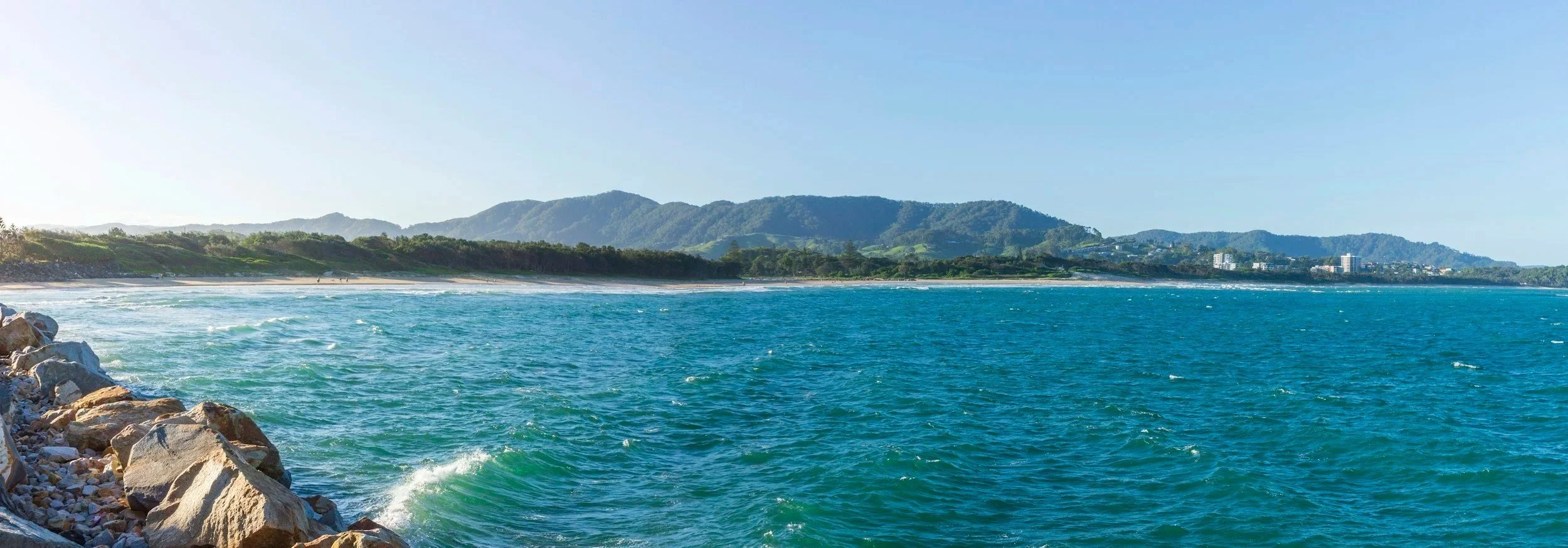
TfNSW MIDO’s objective was to complete an environmental assessment to support a 10-year maintenance dredging program in Coffs Harbour, with an integrated plan to reuse suitable dredged sand via nearshore placement at Park Beach. The intent was to enable the dredged material to re-enter the natural northward drift of sediment, creating the opportunity to help nourish beaches north of the harbour.
Project Location & Scope
The environmental assessment focused on the inner harbour area at Coffs Harbour, with the option to place suitable sand in the nearshore area at Park Beach in a way that aligned with the intent of Coffs Harbour City Council’s Coastal Zone Management Plan (CZMP) 2019.
Key features of the proposal:
The proposal included a practical, repeatable program designed to respond to changing conditions over time, including:
Maintenance dredging every one to three years (subject to infill rates) across a 10-year period
Average sediment volumes of approximately 96,000 m³ expected in most campaigns (to be confirmed via regular surveys), with the initial campaign expected to be approximately twice that volume
Dredging of key navigation areas to minimum depths of:
Marina navigation channel: -4.5 m lowest astronomical tide (LAT)
Boat ramp navigation channel: -2.5 m LAT
Sediment sampling prior to each campaign to inform suitable placement locations
Nearshore placement at Park Beach when sand is identified as suitable
Bed levelling after dredging, and periodic levelling of high spots created through natural shoaling and accretion
Creation of sediment sinks at key locations to help reduce dredging frequency along entrance channels
What Blue Sky provided:
Blue Sky Planning & Environment’s role was to coordinate the environmental assessment process so TfNSW MIDO could confidently progress the program:
We prepared the Review of Environmental Factors (REF) to support the project’s approval pathway
We coordinated specialist studies (bringing multiple technical inputs into a single, coherent assessment)
We acted as the main point of contact for TfNSW MIDO staff, keeping the process moving and decisions well documented
TfNSW MIDO engaged Blue Sky because of our:
experience preparing REFs for transport and infrastructure projects
planning qualifications to address statutory requirements
proven track record coordinating multiple specialist inputs under tight timeframes
Project Challenges
This was a complex coastal assessment, shaped by both environmental sensitivity and real-world operational constraints.
Working within a sensitive marine environment
A key challenge was that the works needed to be undertaken within the Solitary Islands Marine Park, requiring a strong focus on:
minimising impacts on aquatic biodiversity
documenting and applying safeguards that are meaningful in a marine setting
ensuring the assessment clearly explained risk pathways and mitigation measures in an accessible way for regulators and stakeholders
liaising with relevant environmental agencies to ensure that their concerns were addressed
Designing safeguards that could evolve over time
Because this is a long-term program, the assessment needed to do more than address a “single dredge event”. A special requirement was to embed safeguards that allow the program to be reviewed and refined across multiple campaigns, informed by environmental monitoring undertaken during the project.
Consultation complexity and Aboriginal land claim context
Consultation was also a significant factor. The harbour is subject to an Aboriginal land claim, and engagement — particularly with the local Aboriginal community — required care, clarity and respect. We worked to ensure consultation inputs were appropriately reflected in both the assessment approach and the mitigation measures.
Seasonal windows and competing constraints
On top of this, delivery had to account for seasonal dredging windows, including:
avoiding specific environmental constraints (such as bird migration periods)
managing potential interactions with commercial fishing
aligning with designated funding and program milestones
Outcomes and Results
Blue Sky commenced work in late 2023, and we worked closely with TfNSW MIDO through the assessment and consultation process to reach a robust determination outcome.
Approval outcome
The REF was finalised and determined in January 2026
The project proceeded via a Part 5 determination (REF), with TfNSW as the determining authority
What the determination enables in practical terms
Together, we established the foundations for a long-term program that supports both safety and sustainability:
a clear, strategic, evidence-based framework to manage sand build-up within the harbour over a 10-year horizon
a pathway to prioritise safe access to waterways and support continued use of maritime infrastructure at Coffs Harbour
a structured process for confirming sediment suitability prior to each campaign, so placement decisions can be made responsibly
safeguards designed to protect the coastal environment and support adaptive management, enabling the program to evolve as monitoring data and site conditions change
Put simply: the determination helps TfNSW MIDO maximise the use and sustainability of maritime infrastructure at Coffs Harbour, while maintaining a careful focus on environmental protection and community expectations.
Client Feedback
The TfNSW MIDO project manager acknowledged Blue Sky’s dedication to achieving the required outcomes for the environmental assessment within a complex approval pathway — recognition we value highly, particularly on large, multi-year infrastructure programs like this one.
If you’d like to talk through an environmental assessment for a coastal or maritime infrastructure project — especially where sensitive environments, consultation requirements and tight delivery windows intersect — I’m always happy to have a conversation.

Ready to Move Your Project Forward?
Fill out the short brief form and I’ll contact you soon to create a customised proposal.
